

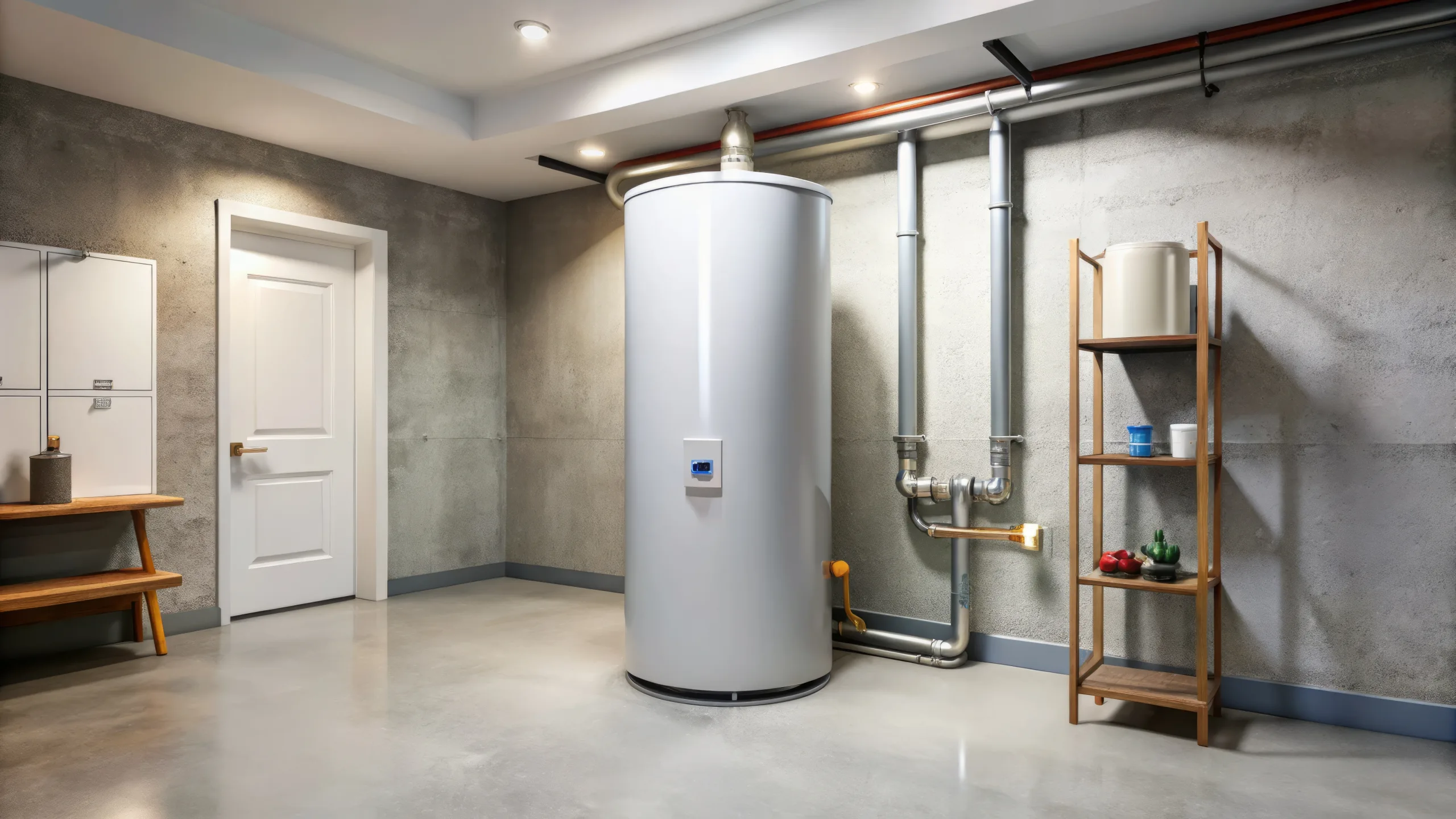
A water heater problem doesn’t always mean you need a new unit. A faulty heating element, thermostat, valve, or pipe joint may need only a repair. A tank leak, heavy corrosion, or repeated failures may mean replacement.
The right choice depends on the cause, the unit’s age, and the repair cost.
- Signs that point to repair
- Signs that point to replacement
- How age, cost, and hard water affect the choice
- What to know before calling a Minneapolis plumber
Quick Answer: Repair or Replace?
| What you notice | Possible cause | Best next step | Urgency |
|---|---|---|---|
| Small leak at a fitting | Loose connection or valve | Diagnose and repair | Urgent |
| No hot water | Breaker, thermostat, element, or gas control | Diagnose and repair | Soon |
| Water gets cold fast | Heating or sizing issue | Diagnose first | Soon |
| Popping or rumbling | Sediment or mineral buildup | Schedule inspection or service | Soon |
| Rust-colored hot water | Corrosion, anode-rod wear, or water-quality issue | Inspect first | Soon |
| Water pooling near the base | Valve, pipe, relief line, condensation, or tank leak | Diagnose first | Urgent if actively leaking |
| Confirmed leak from the tank body or seam | Internal tank failure | Replace | Urgent |
| Unit is about 8-12 years old | It may be near the end of its usual tank life | Compare both options | Plan ahead |
| Several repairs in a short time | Aging system or repeated part failures | Compare total costs | Plan ahead |
This chart is a starting point. A plumber must confirm the leak source and failed part first. If the unit is actively leaking, treat it as urgent. A.O. Smith advises shutting off the power or gas supply and the water supply before arranging professional help.
When Water Heater Repair Usually Makes Sense
Repair may be enough when the tank is sound. A new part may fix the fault. This is more likely when the unit is fairly new and the cost is reasonable.
| Repair may make sense when… | Why it matters |
|---|---|
| The tank has no confirmed leak | The tank may still have useful life |
| One part has failed | The part may be replaced |
| The unit is fairly new | You may get more years from it |
| This is the first major problem | One fault does not mean full system failure |
| The repair costs much less than replacement | You may restore hot water with less disruption |
Common repair issues include faulty heating elements, thermostats, loose connections, pilot-light problems, and worn valves. A.O. Smith lists these among common water heater problems.
Paul Bunyan’s water heater repair service covers tank and tankless systems from major brands. Its process includes a full check, clear explanations, upfront pricing, repair, testing, and cleanup.
When You Likely Need a New Water Heater
Replacement is more likely when the tank itself has failed. A tank-body leak isn’t a one-part repair. A cracked or corroded tank or a failed seam usually means the unit needs to be replaced.
| Replacement sign | What it may mean |
|---|---|
| Confirmed leak from the tank body or seam | Internal corrosion or tank failure |
| Rusty water keeps returning | Corrosion or anode-rod wear may be involved |
| The heater is near or past its expected life | More parts may fail with age |
| Repairs keep coming back | Replacement may cost less over time |
| Several parts fail at once | The problem may be wider than one component |
| Severe corrosion is visible | The risk of a larger leak may be rising |
A.O. Smith says a leak from the tank itself usually requires replacement. It also notes that a used-up anode rod can speed corrosion. Other causes can lead to discolored or smelly water.
Rust-colored water doesn’t prove the tank has failed. Have the source checked before you replace the unit.
Use the Age and Cost Test
Age is one clue. It isn’t the whole answer. A newer unit with one failed part may be worth fixing. An older unit with many faults may not be.
| Unit age or condition | Better question to ask | Usual direction |
|---|---|---|
| Under about 8 years | Is the tank sound and is this one part? | Repair often makes sense |
| About 8-12 years | What is the repair cost compared with a new unit? | Compare both options |
| More than 12 years | Could another part fail soon? | Look closely at replacement |
| Any age with a tank-body leak | Can the tank itself be repaired? | Replacement is usually needed |
| Any age with repeated repairs | What have repairs cost over the past year? | Compare long-term cost |
Rheem offers a useful rule of thumb: when a repair costs more than about half the price of a new unit, replacement is often the better value. Warranty coverage, unit type, installation needs, and hot water use still matter.
Ask for two prices: one to fix the old unit and one to install a properly sized replacement. For current price ranges, see Paul Bunyan’s average water heater replacement cost guide.
Hard Water Can Change the Repair Decision in the Twin Cities
Water hardness varies by home and water source. The Minnesota Department of Health says water above 7 grains per gallon, or 120 milligrams per liter, may call for softening to help appliances run well. It also says softening can help prevent mineral scale inside hot water heaters.
Paul Bunyan notes that hard water can make sediment build up faster in Minnesota homes. Its guidance on water heater maintenance says a twice-yearly flush may help in hard-water areas.
Sediment may call for service, not a new tank. If the unit is old, buildup may be one factor in a replacement decision.
| Hard-water sign | What to ask about |
|---|---|
| Popping or rumbling | Is sediment covering the heating surface? |
| Less hot water | Has buildup reduced tank capacity? |
| Mineral scale | Would treatment or a flush help? |
| Repeat repairs | Is buildup adding strain to old parts? |
Check These Details Before You Call
A few facts can help a plumber find the fault faster. Don’t open sealed controls or work on gas lines or live wires unless you’re trained.
| Note to collect | What to record |
|---|---|
| Unit age | Model and serial label |
| Fuel type | Gas or electric |
| System type | Tank or tankless |
| Leak location | Top, sides, base, valve, or nearby pipes |
| Hot water symptom | No hot water, short supply, or unstable temperature |
| Sound or smell | Rumbling, popping, gas odor, or burning odor |
| Repair history | Recent parts and service calls |
If you smell gas: leave the home on foot. Don’t use a phone, switch, match, or other spark source inside. From a safe location, call 911 and your natural-gas utility. CenterPoint customers in the metro area can call 612-372-5050. Its broader emergency line is 800-296-9815.
If water is leaking: use a safe path to close the dedicated water valve. A.O. Smith advises turning off the power or gas supply and the water supply before inspecting a leaking unit. Then contact a professional.
Why Installation Details Matter in Minneapolis
A new unit has to fit your home, hot water use, fuel source, plumbing layout, and available space. Paul Bunyan’s water heater installation page says its plumbers evaluate household needs and the existing plumbing layout. It also highlights proper sizing, secure connections, and code compliance.
| Installation detail | Why it matters |
|---|---|
| Household hot water demand | Helps set the right size |
| Fuel and venting | Supports safe operation |
| Available space | Determines which models can fit |
| Plumbing layout | Helps plan new connections |
| Permits and code | Supports a compliant installation |
| Old-unit removal | Keeps disposal off your to-do list |
The City of Minneapolis lists installing or replacing a water heater as work that requires a plumbing permit. That rule doesn’t say who obtains the permit, so ask your Minneapolis plumber how the process will be handled.
Water Heater Repair vs. Replacement FAQs
| Question | Short answer |
|---|---|
| Can a leaking water heater be repaired? | A fitting or valve leak may be repairable. A confirmed tank-body leak usually calls for replacement. |
| Is rusty water a reason to replace the unit? | Not by itself. Have the cause checked first. |
| Should I replace a water heater that still works? | Consider it if the unit is old, corroded, noisy, or needs frequent repairs. |
| Does maintenance help? | Flushing sediment and checking safety parts can help protect some units. |
| How can I compare costs? | Ask for a repair price and a replacement price. Then compare age, warranty, and likely future repairs. |
The clearest test is simple: if the tank is sound and one part failed, repair may be reasonable. If the tank body leaks, the unit is old, or problems keep coming back, compare replacement options. A professional inspection can confirm the cause and explain both choices.
Paul Bunyan Plumbing & Drains offers water heater repair, maintenance, and replacement service in the Minneapolis area. Its site describes upfront, no-surprise pricing and 24/7 emergency service.