

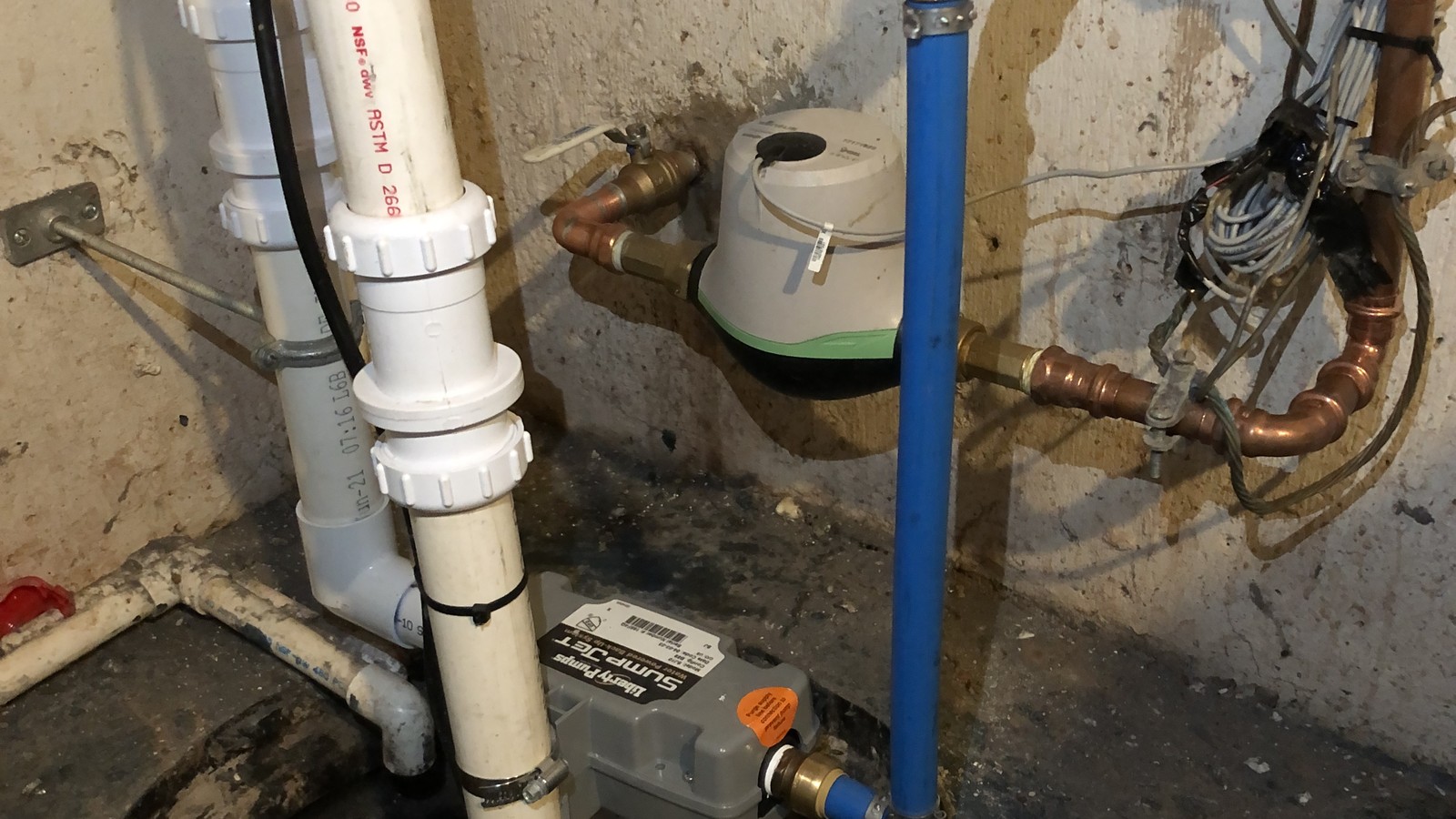
If keeping your basement dry during a power outage is your main priority, a properly sized battery-backup sump pump pumps automatically, with no portable generator to set up. A generator can keep the primary pump running and may power other selected circuits, but it has to be sized and connected correctly. If you want broader backup power, or you already own a properly installed standby generator, the generator may be the better fit. Each option has limits. A generator can’t fix a pump that has failed mechanically, and a battery-powered pump has limited capacity and runtime.
This comparison covers dedicated battery-backup sump pumps and generators used to power a sump pump. Portable generators and permanently installed standby systems work differently, so the right choice depends on the equipment already in your home and how much of it you need to keep running.
| Decision factor | Battery-backup sump pump | Generator powering a sump pump |
|---|---|---|
| What it powers | A separate backup pump in the sump pit, in many systems | The primary sump pump and, if sized and connected for them, other selected circuits |
| What starts it | The backup pump’s float switch starts it when water rises; system details vary by model | A portable unit usually requires homeowner setup; a standby generator with an automatic transfer switch can start and transfer power automatically |
| Main advantage | Dedicated pumping backup during an outage; some systems can also take over if the primary pump cannot run | Can support the primary pump and provide power to other chosen loads |
| Main limitation | Pumping capacity and runtime depend on the pump, battery, water inflow, and discharge conditions | Requires adequate capacity and a safe connection; a generator alone does not replace a failed pump |
| Best fit | Homeowners who want a dedicated, automatic backup for the sump system | Homeowners who want broader outage coverage and can safely operate or install the appropriate generator system |
What a sump pump battery backup does
A battery-backup sump pump is a second pump installed in or beside the sump basin. When the water reaches its float switch, the backup pump draws power from a charged battery and sends water out through a discharge line. Many systems are designed to start when the primary pump loses power or can’t operate, though the exact trigger and setup depend on the model. A backup pump does not replace a properly working primary pump.
This setup is useful when the immediate concern is keeping water out of the basement during a power outage. Depending on the system and installation, it can also act as a separate pumping unit if the main pump develops a problem. A Xylem Bell & Gossett battery-backup pump manual describes an automatic float switch and cautions that the backup unit is not intended to serve as the primary pump.
The trade-off is finite capacity. Runtime depends on the battery’s capacity, condition, and charge level, and on how often the pump runs. The actual pumping rate also depends on the model and how high it has to lift water. A Consumer Reports buying guide recommends matching a backup pump’s capacity to the home’s needs and accounting for vertical lift and the space available in the pit. Battery type and maintenance requirements vary, so follow the pump and battery manufacturers’ instructions. One battery or replacement interval won’t suit every system.
What a generator can and cannot do
A generator supplies electricity to the primary sump pump. A correctly sized system may also power other selected household circuits, which is its main advantage over a dedicated battery pump. The key word is “correctly.” Sump pumps have motors, and motors can need more power to start than they use while running. Generac’s sizing guidance advises homeowners to account for starting and running wattage and to use a professional load analysis for a home-specific recommendation.
Portable and standby generators also ask different amounts of work from the homeowner. With a portable unit, you need a safe plan for operating and connecting it during the outage. A home standby generator paired with a compatible automatic transfer switch can start when utility power fails and switch the home’s power source automatically. Cummins explains how that transfer works.
A generator also needs a reliable fuel supply and maintenance. Portable units may need refueling, and a standby unit can’t run indefinitely either. Generac’s runtime guidance emphasizes fuel availability, oil checks, and required maintenance stops for the models it covers. Follow your own unit’s manual.
A generator has one more limit: it supplies power, and that’s all. If the primary pump is jammed, worn out, or otherwise unable to move water, electricity won’t fix that mechanical failure. A separate battery-backup pump may add another layer, but it has to be sized and installed for the sump pit and discharge conditions.
Which option fits your home?
Choose a battery backup when the sump is the priority
A dedicated battery system is a practical match if your main goal is to keep a sump pump running during an outage without relying on someone to set up a portable generator. It’s also worth considering if you want a second pump that can respond to rising water when the primary pump can’t run. Check the system’s rated pumping capacity at your home’s discharge height, whether it fits beside the main pump, what battery it requires, and how it signals a low battery or that the backup is running.
The best sump pump battery backup for your home is one that matches the expected water flow, lift height, sump-pit dimensions, primary pump, and the manufacturer’s battery requirements. Ask how the backup will be tested and how often to check the battery and alarm.
Choose a generator when you want broader backup power
A generator fits better when you want to keep more than the sump pump running, such as selected lights, refrigeration, or other essential equipment, and you can plan for its installation or operation. Before choosing a unit, identify the pump’s electrical requirements and the other loads you expect to run at the same time. Ask a qualified generator professional to confirm the starting load, running load, and connection method. Don’t size a generator from the pump’s running wattage alone.
If you’re considering a portable generator, factor in where it can run safely and how you’ll connect it without improvising household wiring. A standby generator with an automatic transfer switch cuts down on manual setup, but it still has to be sized and installed for your home.
Consider both if you need separate layers of protection
A generator and a battery backup can play different roles. The generator powers the primary pump and selected circuits, and a separate battery-powered pump can keep pumping if the primary unit itself can’t operate. Some problems neither one solves: a blocked shared discharge line can stop both pumps from moving water out. The extra equipment also needs maintenance. Ask a qualified professional to review the pump, pit, discharge line, power source, and likely outage needs before deciding whether both layers make sense.
Generator safety is part of the decision
Portable generators produce carbon monoxide. The U.S. Consumer Product Safety Commission says to run them outdoors at least 20 feet from the house, point the exhaust away from windows, doors, and vents, and never run them inside a home, garage, basement, or other enclosed space, even with doors or windows open. It also recommends working carbon-monoxide alarms on each level and outside sleeping areas. Follow the generator manufacturer’s instructions for wet-weather and electrical-shock precautions.
Never plug a generator into a household wall outlet to power the wiring. This practice, called backfeeding, can electrocute utility workers and others. Have a qualified electrician install an appropriate transfer switch for any connection to household circuits. The CPSC’s portable-generator safety alert also says to shut off the generator and let it cool before refueling.
If safe placement or connection isn’t practical on your property, that may tip the decision toward a dedicated battery backup for the sump system. Either way, test the equipment before an outage, following its manufacturer’s instructions.
The Bottom Line
If keeping your basement dry is the main goal, a properly sized battery-backup sump pump is the more targeted choice. A generator makes more sense when you also need broader household backup power, but it still relies on a working primary pump. Neither guarantees a dry basement: pump capacity, battery charge or fuel availability, and a clear discharge path all matter.
Get the sump system assessed before choosing
The backup source is only one part of basement protection. The primary pump, basin, float switches, check valve, and discharge line all affect whether water leaves the home as intended. A professional assessment can show whether the main pump is in good condition, whether a backup will fit and keep up with the expected lift, and how the system should be tested.
For St. Paul homeowners, Paul Bunyan Plumbing & Drains offers sump-pump and battery-backup installation, including a full-system inspection. Its plumbers explain the options and provide written pricing before work begins. If you need help selecting or installing a sump-pump battery backup, Schedule Plumbing Service and ask for an evaluation of the full setup. For generator sizing or electrical connection, consult a qualified generator professional.
Photo: Famartin / Wikimedia Commons, CC BY-SA 4.0. Cropped to fit.